
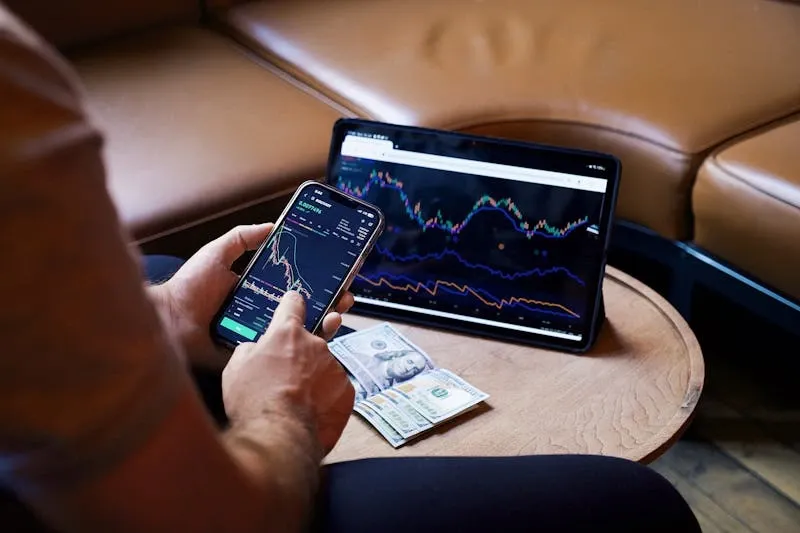
Traders use technical tools and fundamental principles to make their trading decisions when they navigate financial markets. Two commonly discussed topics are FIBONACCI TRADING and understanding WHAT IS A SPREAD IN TRADING. The first method uses mathematical ratios to predict future prices while the second method explains how traders need to pay actual costs in order to complete their trading activities. The concepts provide essential knowledge which both new traders and experienced traders require for their trading activities.
Understanding Fibonacci Trading
FIBONACCI TRADING operates on the Fibonacci sequence which uses mathematical rules that define all numbers as the result of adding the previous two numbers. The trading community uses this sequence to determine market support and resistance points. Traders use these levels to forecast the points at which prices will change direction or stop moving during a market trend.
Traders most frequently apply Fibonacci ratios which include 23.6%, 38.2%, 50%, 61.8%, and 78.6% as their primary Fibonacci ratios. Traders use Fibonacci retracement and Fibonacci extension tools to implement these levels. Traders in an uptrend use Fibonacci retracement levels to identify possible entry points when the market experiences price pullbacks before the upward trend resumes.
The popularity of FIBONACCI TRADING comes from its straightforward nature and its successful performance. The system enables price movement analysis through its organized framework although it does not ensure successful outcomes. Many traders use Fibonacci levels together with other indicators like moving averages and candlestick patterns to achieve better trading results.
Why Fibonacci Levels Matter
The significance of Fibonacci levels arises from their ability to match actual market movements. Human psychology drives market behavior because traders react to specific price points. The resulting market movements create patterns that traders can identify through Fibonacci analysis tools. The 61.8% level known as the golden ratio holds exceptional significance because it serves as a vital trading threshold. Traders should monitor this level because price movements tend to reverse at this specific point. Traders who use FIBONACCI TRADING gain better insights into potential market reversals which enables them to execute their trade operations with improved control.
What is a Spread in Trading?
To fully understand trading, it’s crucial to know WHAT IS A SPREAD IN TRADING. The spread establishes the price difference between two points which include the bid price used for asset selling and the ask price used for asset purchasing. The entry trade price consists of the difference between buy and sell prices which establishes the entry trade price. A currency pair with a bid price of 1.1000 and an ask price of 1.1002 shows a spread of 2 pips. A trader begins with a spread loss which equals the spread value when he creates a new position. Understanding WHAT IS A SPREAD IN TRADING is important because it directly impacts profitability. The trading expenses decrease when the spread decreases. Short-term traders such as scalpers experience higher losses because larger spreads reduce their profits.
Types of Spreads
There are two primary types of spreads which traders use for their trading activities: fixed spreads and variable spreads. Fixed spreads maintain their value throughout all market situations because they establish definite trading costs. The market conditions determine how variable spreads move according to the existing market volatility and available market liquidity.
The market spread reaches its widest point during important news announcements and when trading activity is at its lowest level. The definition of WHAT IS A SPREAD IN TRADING must be understood because it plays a crucial role in managing trading risks. Traders need to know the times when spreads will increase their operational expenses because they need to maintain their trading costs at a minimum.
How Fibonacci Trading and Spreads Work Together
FIBONACCI TRADING enables traders to find price levels, while spreads establish their costs for pursuing those price levels. A trader might identify a perfect entry point using Fibonacci retracement, but if the spread is too high, it could reduce the potential profit.
Traders exiting their positions at key Fibonacci levels must evaluate whether their planned spread will generate sufficient profit margins. Traders might believe they have found good trading opportunities by using technical analysis, but their trades will not deliver profitable results because they disregard this particular factor.
Practical Tips for Traders
The FIBONACCI TRADING system requires traders to verify their trading signals through additional indicators. The exclusive use of Fibonacci levels introduces danger for traders because market behavior relies on multiple elements. The combination of technical instruments raises the probability of achieving successful outcomes.
Traders need to understand WHAT IS A SPREAD IN TRADING before they execute their trading activities. Select brokers who provide low spreads because you should refrain from trading during times of high market volatility except when you possess definite trading methods.
Risk management stands as a vital element. The implementation of stop-loss orders together with position sizing will help you maintain your capital. Risk management creates a foundation which allows organizations to maintain their operations through challenging times because all strategies will eventually encounter failures.
Conclusion
FIBONACCI TRADING and WHAT IS A SPREAD IN TRADING together form essential knowledge for all newcomers to the financial markets. Fibonacci tools help identify potential price movements, while spreads determine the cost of executing trades. The combination of these two concepts enables traders to make better trading decisions which will enhance their overall performance.
Traders need to dedicate time and effort to learn basic skills because those skills will help them build a strong foundation which will enable them to succeed in the fast-paced trading environment.